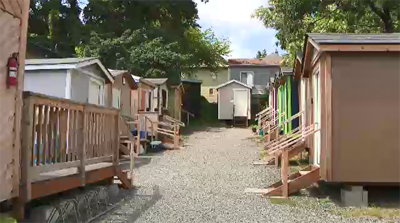
The City of Reno is considering building a tiny house village as transitional housing for the homeless.
The project would be a collaborative effort between Reno, Sparks and Washoe County, and representatives visited examples of these villages in Seattle last week.
After getting her questions answered on the tour, Reno Vice Mayor Neoma Jardon said she'd put the likelihood of building one in Reno at 90 percent.
"I was impressed," Jardon said. "I'm still as enthusiastic now. We recently launched it at the City of Reno to have staff look at how this may fit into the puzzle. So we have already started down the road to see if this is a viable option."
Part of the reason for that is that tiny house villages are relatively cheap.
A tiny house village in Seattle-- complete with caseworkers and wraparound services-- costs the city about $200,000 a year. If 40 people live there, that comes to about $14 per person per day.
By comparison, a person staying at the shelter in Reno costs the public about $26 a day.
And both of those options are far less expensive than doing nothing. Each person out on the streets costs the public between $150 and $500 a day, due to law enforcement, cleanup, court services, and medical costs. One inebriated person is a three-hour call for police, which Jardon says is a big drain on resources.
"The cost to the taxpayers is significantly more expensive for the individuals, the habitually homeless out on the streets, than the services that these tiny homes would cost to help them," she said.
Jardon said homelessness is one of the top three major issues for the city. But she says it's a fixable problem; the numbers are relatively manageable, with between 80 and 130 people still on the streets. She says the first step is to get them sheltered. Then, they can get them into programs and working with case managers to find jobs and permanent housing.
According to the head of the local shelter, Volunteers of America Regional Director Pat Cashell, most of the homeless in Reno suffer from addictions, mental illness, or both.
"What people don't understand is what homelessness actually is," Cashell said. "I always get asked, 'Our economy is improving, so why aren't these people getting jobs?' And really once you dive into their lives and actually understand what they've been through and the trauma that has taken place in their lives, until they get the help that they really need, they're not employable."
To learn more about the tiny house project, tune in for Face the State this weekend. It's airing Saturday at 4:30 a.m. and 3:30 p.m. and on Sunday at 6:30 a.m. and 3:30 p.m. After they air, episodes are posted here.
