You may be familiar with the scandal surrounding Volkswagen and their diesel cars cheating emission tests. The research by a group of West Virginia University is credited with exposing those violations and the team has a unique connection to the Northern Nevada.
Before breaking the scandal with their study, they were taught by their mentor, Professor Mridul Gautam, who teaches at the University of Nevada now. He asked them to make the trip to talk to his current students about their experiences and how crucial science can be.
Gautam, who is also the University's Vice President of Research and Innovation, says he may have taught the researchers, but all the credit goes to them for their hard-work, uncovering the car company's discrepancies.
"These two were out in the field, looked to the data, analyzed the data, raised questions," said Gautum.
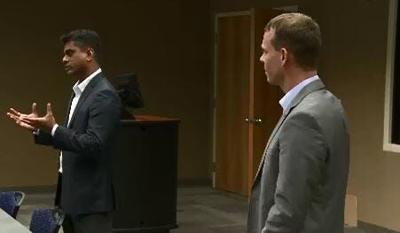
The team outlined their research to a group of mechanical engineering students about how they tested emission in Volkswagen diesel cars, revealing something shocking.
<Dr. Arvind Thiruvengadam, a Research Assistant Professor at the West Virginia University said, "Since we had laboratory testing conditions that showed really low emissions, then when we went out in the real world, you see these 35-40 times higher, that kind of opened a can of worms."
While they didn't set out to implicate Volkswagen, the researchers learned how much their studies meant.
"It might not directly relate to practical applications. Sometimes it brings out truths in some aspects. Especially the research we work on," said Thiruvengadam
Gautum added, "It's about health of human beings. It's about health of people who live close to highways. It's about health of babies who are born and how they're affected."
Students who listened to the presentation said they were enlightened on how much research like this can truly impact the real-world.
Brynn Williams, a mechanical engineering student said, "Automotive engineering, you don't always think of it as ground-breaking research on emissions, and they discovered something that kind of shook the nation. Like, I heard about it, so many people here did. So it's inspiring to think that what you're researching, while it may not be interesting on the surface, it can really do a lot."
Professor Gautam hopes to establish a program on engines, fuels and emissions at the University of Nevada to teach students about this kind of research.