There’s an increasingly narrow strip of New Orleans marshland that hardly anyone lives on, but without it, hundreds of thousands of people wil…
From
To

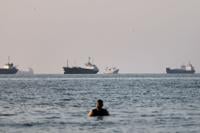
Even with a deal to reopen the Strait of Hormuz, it could take weeks or months for oil to fully flow
The tentative agreement to end the war in Iran and reopen the Strait of Hormuz would be good news for the global economy. But oil won't simply start flowing through the key shipping artery the way it did before the war. Then, it carried a fifth of the world's crude. Now, it will take time for hundreds of ships trapped in the Persian Gulf to exit through the narrow strait. And Gulf oil producers that throttled back production will need time to get oil moving again. And ship captains may take their time deciding it's safe and that the threat of attack from Iran has truly receded.


AP Featured Top Story
The United States and Iran have reached an initial agreement to end the war and reopen the Strait of Hormuz. It could allow desperately needed oil and gas to reach the global market, giving relief to the global economy more than three months since fighting began. Details of the deal were not immediately available. Iran signaled that implementation would not start until the signing. Pakistan says that will be Friday in Switzerland. U.S. President Donald Trump confirms the deal and has authorized an end to the U.S. naval blockade of Iranian ports. Iran’s deputy foreign minister also confirms the agreement. Broader negotiations on issues like Iran’s nuclear program are expected to continue.

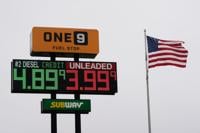
Pakistan announced that the U.S. and Iran reached an agreement to end the war and open the Strait of Hormuz. But that doesn’t mean high oil and gasoline prices and energy supply problems will be solved overnight. Energy experts say it will likely be months before energy companies can resume operations to the point where they're able to meet the world’s demand. It will take a long time for ships stranded in the Persian Gulf to reach their destinations. And companies need to be confident that peace will last before they send in ships or restart oil production.
Gov. Gavin Newsom announced Thursday he is deploying $46 million in voter-approved funding to help clean up the Tijuana River and the New River at the California-Mexico border. The Tijuana River is one of the nation's worst and longest-running environmental crises. Since 2018, more than 100 billion gallons of raw sewage laden with industrial chemicals and trash have poured into the river. The U.S. and Mexico signed an agreement last year to clean up the longstanding problem by upgrading wastewater plants. The California funding will come from Proposition 4, a $10 billion bond measure approved in 2024 to fund water, climate, wildfire and natural resource projects across the state.

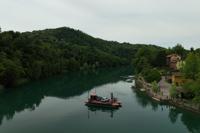
IMBERSAGO, Italy (AP) — The ferry glides from one bank of northern Italy's Adda River to the other, guided by a cable and pulled by currents, …

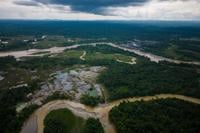
FILE - Visible deforestation from illegal mining is visible along rivers near Paimado, Colombia, Sept. 24, 2024. (AP Photo/Ivan Valencia, File)

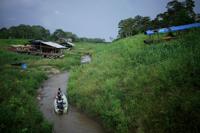
FILE - People maneuver by boat through the low water levels of a tributary that connects with the Amazon River, in Isla de la Fantasia, on the outskirts of Leticia, Colombia, Oct. 20, 2024. (AP Photo/Ivan Valencia, File)

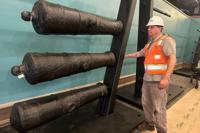
Georgia's oldest city is welcoming a truckload of historical treasures from the earlier period of U.S. history. Seventeen cannons that experts believe sank in a Georgia river during the American Revolution arrived by truck Wednesday at a Savannah museum that plans to put them on display during the Fourth of July weekend marking American's 250th birthday. Archaeologists say the big guns sat at the bottom of the Savannah River for nearly 240 years before they were discovered during a 2021 dredging project. The cannons spent years being cleaned and preserved at Texas A&M University before returning to Georgia.


AP
The U.S. military says it stopped another commercial vessel trying to break through the U.S. blockade of Iranian ports. The military said on Saturday that the Gambia-flagged bulk carrier Lian Star ignored multiple warnings from U.S. forces overnight and so its engine room was struck with a missile. The ship remains adrift in the Gulf of Oman. The U.S. launched the blockade on April 17 in response to Iran effectively closing the strait after the war began with U.S. and Israeli strikes on Feb. 28. A fragile ceasefire has held since April 7, with discussions ongoing about extending it.